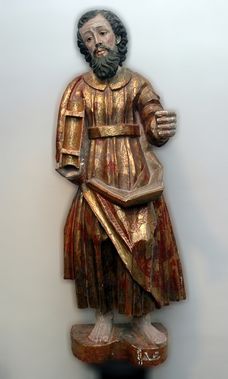
Esta exquisita figura antigua de madera tallada y estofada es una verdadera joya del siglo XVIII. Representa al Evangelista San Pablo, uno de los pilares fundamentales del cristianismo. Esta obra de arte es un ejemplo destacado de la escuela colonial Mexicana y su calidad y detalle artístico son impresionantes.
La figura de San Pablo está ricamente vestida en tonos de rojo con elegantes acentos dorados, lo que resalta su importancia en la tradición religiosa. Sostiene las sagradas escrituras en su brazo derecho, un atributo que simboliza su papel como autor de muchas de las epístolas del Nuevo Testamento y su contribución fundamental a la difusión del cristianismo.
Esta obra maestra del arte sacro no solo es una expresión de profunda devoción, sino también un testimonio del alto nivel de habilidad artística alcanzado en la época colonial Mexicana. Su presencia en su colección no solo enriquecerá su entorno, sino que también proporcionará una conexión tangible con la rica historia religiosa y artística de México.
Importancia de San Pablo en la Religión Católica:
San Pablo ocupa un lugar de gran relevancia en la religión católica como uno de los apóstoles más influyentes y prolíficos. Su contribución a la expansión del cristianismo es incalculable, ya que fue el autor de numerosas epístolas que forman parte del Nuevo Testamento. Sus escritos teológicos y doctrinales han tenido una influencia duradera en la interpretación de la fe cristiana y la teología católica. Además, su papel en la conversión de muchas personas al cristianismo y su incansable labor misionera lo convierten en un símbolo de dedicación y devoción para los fieles católicos en todo el mundo.
Iconografía de San Pablo y su Importancia en la Historia del Arte Novohispano:
La representación de San Pablo en el arte novohispano es una manifestación de la rica fusión de las tradiciones artísticas europeas e indígenas en el período colonial. La iconografía de San Pablo se caracteriza por su vestimenta ornamental, que a menudo incluye elementos indígenas y europeos. Su atributo más reconocible es la presencia de las sagradas escrituras, un símbolo de su autoría y de su papel como evangelizador. Las imágenes de San Pablo, como esta escultura, son testimonios visuales de la compleja interacción cultural que tuvo lugar en la Nueva España. Representan la devoción religiosa, pero también son ejemplos notables de la maestría artística de la época colonial, donde se combinaban las técnicas y los estilos de ambos mundos.
 Copyright Noyola Anticuarios.
Puede ser copiado dando credito al autor y una liga a www.noyolaanticuarios.com
Copyright Noyola Anticuarios.
Puede ser copiado dando credito al autor y una liga a www.noyolaanticuarios.com